
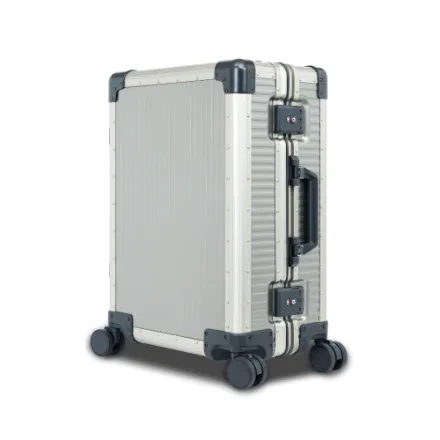
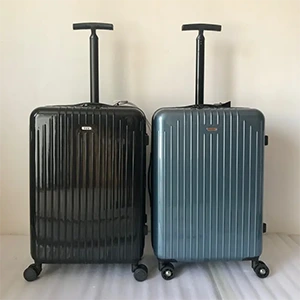

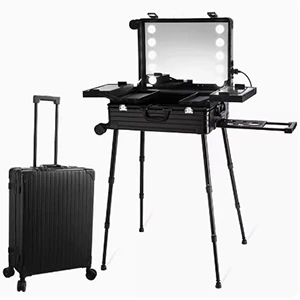



Two different products get sold as aluminum luggage. Only one of them has an aluminum body.
That sounds like a small vocabulary problem. It is not. It decides your tooling bill, your minimum order, your unit cost and the way the case fails in a customer’s hands, and buyers routinely put quotes for the two side by side and wonder why the numbers look nothing alike.
What the word aluminum is doing in each name
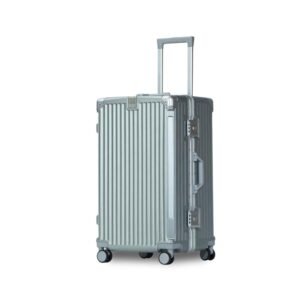
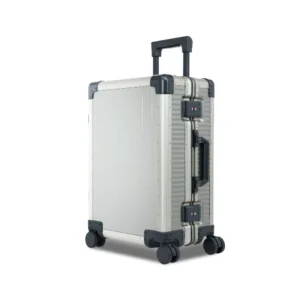
An aluminum frame case has molded plastic shells, usually polycarbonate or ABS. The aluminum is an extruded profile running around the opening, closed by latches instead of a zipper. The metal is the closure. The body is plastic.
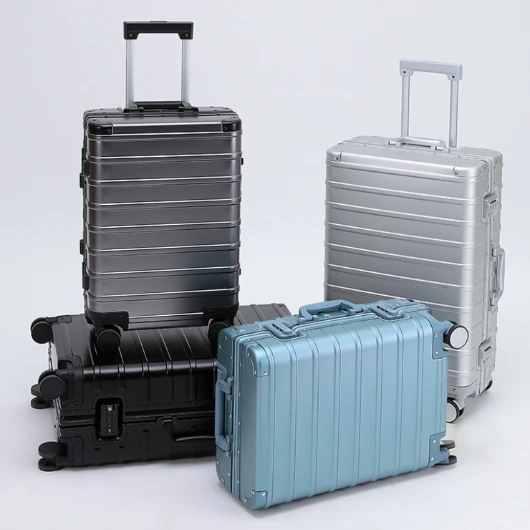
A full aluminum case has an aluminum sheet body. The panels are the product. There is a frame and there are latches here too, so from three meters away on a shelf the two can look related.
We keep these two terms separate in every document we send, and we ask customers to do the same, because a specification that just says aluminum has not specified anything yet.
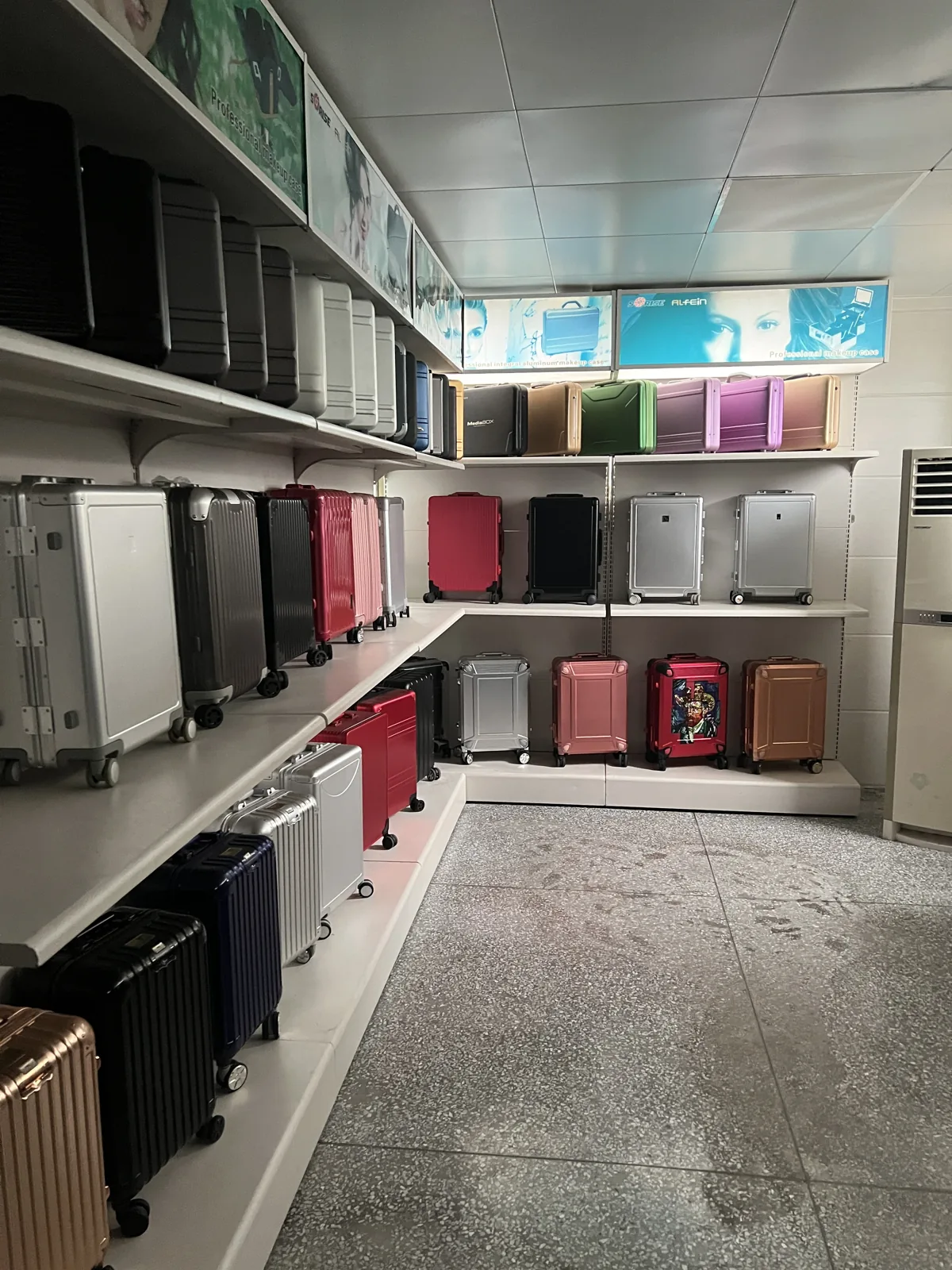
They are made on equipment that has nothing in common
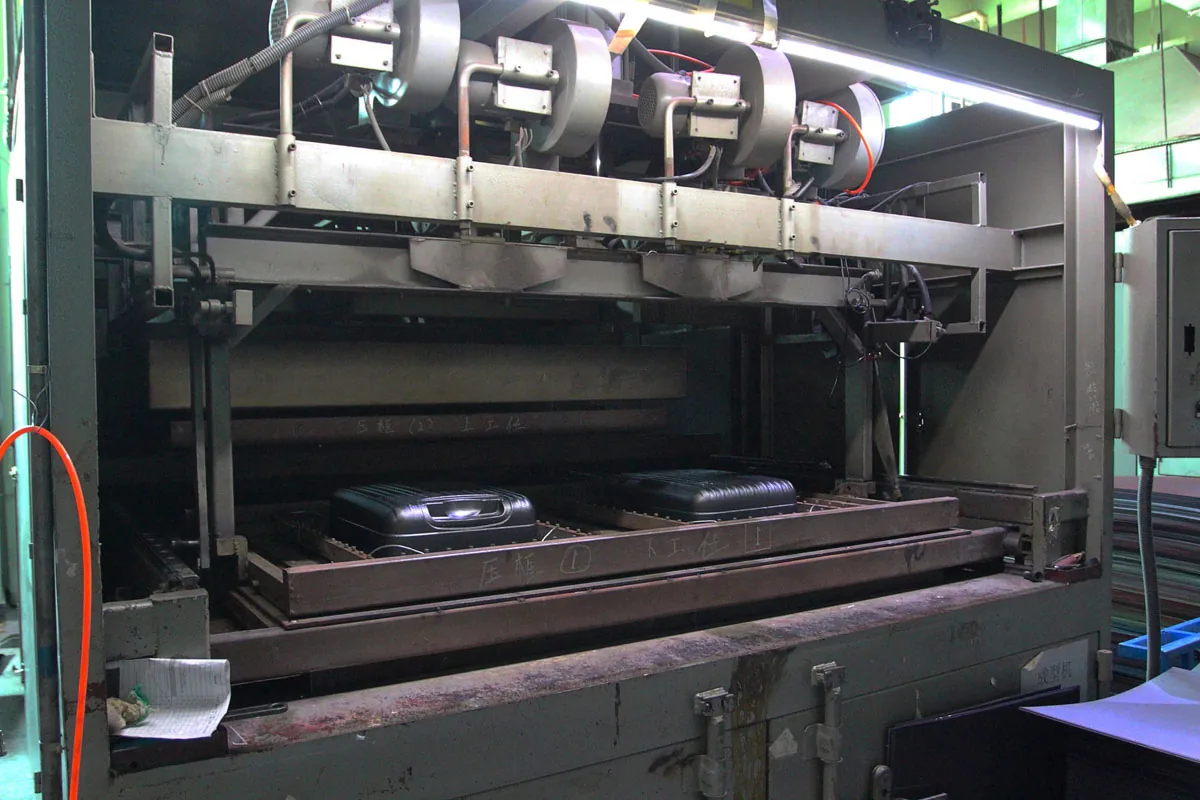
A frame case starts with a forming tool. Sheet stock is heated and formed into a shell, or resin is injected, depending on the shell material and the finish you want. Either way there is a tool, that tool is steel, and it exists before the first good part does. What that tool is cut from and how long it lasts is covered in mold steel selection for luggage shells.
The aluminum frame is a separate line entirely. It is extruded profile, cut to length, mitered, and fitted with latches and a lock. Different supplier, different lead time, different tooling.
A full aluminum case skips the shell tool. Sheet is cut, formed on press equipment, and joined at the corners, then the same category of frame and latch hardware goes on. The tooling that replaces the shell mold is press tooling, which is a different order of investment, and it also decides which shapes the sheet can actually be formed into. The full picture of what a program actually pays for is set out in the tooling list a luggage quote should itemize.
The cost curves run in opposite directions
This is the part worth understanding before you ask for prices.
A frame case carries a large one-time tooling cost and a comparatively low cost per unit. Spread that tool over enough pieces and the per-unit number gets attractive. Spread it over a small first order and it dominates everything else on the invoice.
A full aluminum case inverts that. The entry cost is far lower because there is no shell mold to cut. The unit cost stays high and stays high forever, because the material is expensive and the forming and finishing work is manual in places where a molded shell needs no labor at all.
So the two constructions suit opposite situations. A small launch quantity, a premium price point and an uncertain forecast point toward full aluminum. A committed volume and a fought-over retail price point toward a frame case. Where exactly the lines cross depends on your quantity, your shell size and your finish, which is why we run that comparison against a real specification rather than publishing a number that would be wrong for most readers. How the tooling side of it gets quoted is in how luggage mold costs are quoted, and the minimum that makes a dedicated design viable at all is in minimum order quantity per design.
They break in different ways, and your market cares
Aluminum dents. The dent stays. Owners of full aluminum cases mostly accept this, and a share of the category’s appeal is that the case visibly accumulates a history. That is fine until it meets a retail channel whose customers return anything with a mark on it.
A molded shell behaves the other way. It absorbs an impact by flexing and comes back, up to the point where it cracks instead, and a crack is not repairable in the field. The aluminum frame on that same case can take a bend that stops the latches from lining up, which reads to the customer as a broken lock rather than a bent frame.
Neither list is a defect list. Which of these outcomes counts as rejectable on your program is something to agree before production rather than during inspection, which is the argument in agreeing a defect classification before production, and the drop and abrasion work that puts numbers behind it sits in luggage testing standards.
What changes downstream
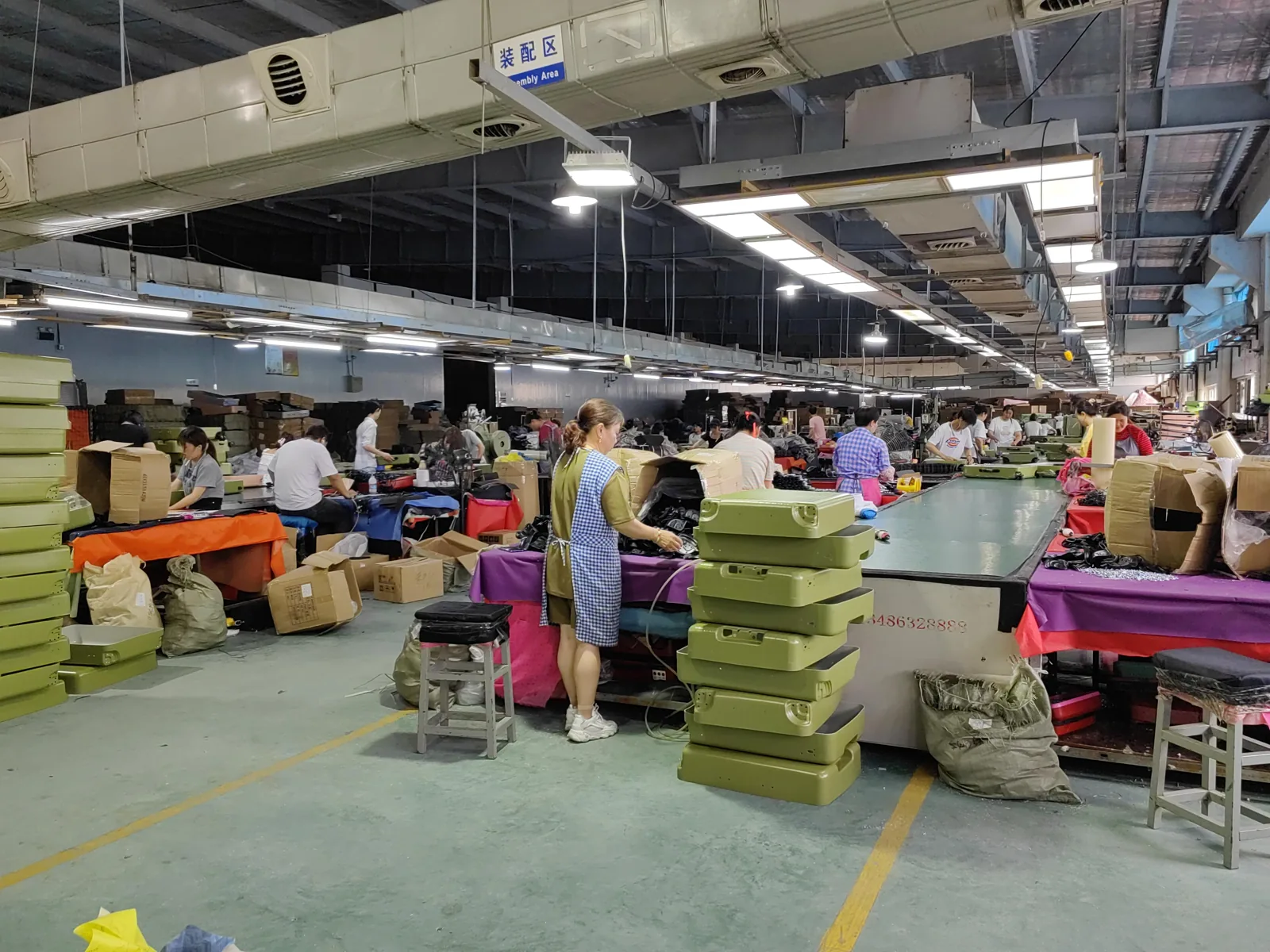
Branding is the first thing. A logo lands differently on a metal panel than on a molded shell, and the method you can use is constrained by the surface rather than by taste. That is the subject of logo application on metal and plastic cases.
Weight is the second. A full aluminum case is heavier, which changes the carton weight, the pallet plan and sometimes the airline size class you are selling against. It also changes the packing specification, covered in export packing and carton marks. What you can actually do about it is set out in hitting a weight target on an aluminum case.
Spare parts are the third and they are usually forgotten. Wheels, handles and latches are serviceable on both. A dented aluminum panel and a cracked plastic shell are both panel replacements, and whether you hold that inventory is a decision to make while the first order is being priced, not two years later when the first claim arrives.
What we do and what we do not
We build both constructions in Houjie, Dongguan, and we will tell you which one your quantity actually supports even when it is the cheaper answer for us to stay quiet.
Our minimum is 300 units per design, and smaller test batches are negotiable rather than refused. Sampling runs 7 to 15 days per round and bulk is 45 days from a confirmed sample. Tooling and payment terms are set per program rather than from a fixed table.
We do not tell you which construction sells better in your market. We can tell you what each one costs to make, how each one fails, and what your quantity does to both numbers.
Frequently asked questions
Is an aluminum frame case made of aluminum?
Only at the opening. The shells are molded plastic, usually polycarbonate or ABS, and the aluminum is an extruded profile around the rim that closes with latches instead of a zipper. A full aluminum case is the one whose body panels are aluminum sheet. The two words are not interchangeable and a quote for one tells you nothing about the price of the other.
Which one has the lower startup cost?
Full aluminum, in most cases, because there is no shell mold to cut before the first unit exists. The trade is that the cost per unit stays high permanently, so a frame case usually wins once the quantity is large enough to absorb its tooling. The crossover moves with quantity, case size and finish, so it is worth running against your actual specification rather than assuming.
Do the two constructions need different testing?
The test methods are the same and the results are not. Drop, abrasion, wheel and handle cycling apply to both, but a metal panel records an impact as a permanent dent while a molded shell either recovers or cracks. Agree in advance which outcomes are rejectable on your program, because the same impact produces a different looking failure on each.
Written by James
James works at aluvox.com in Houjie, Dongguan. The construction and process details in this article describe the two case types built on our own lines.