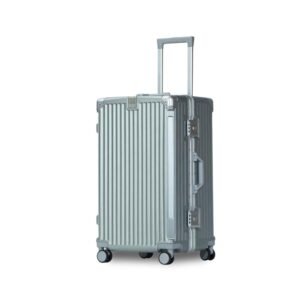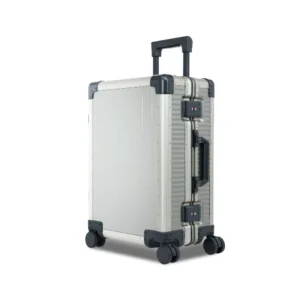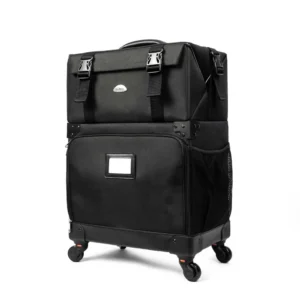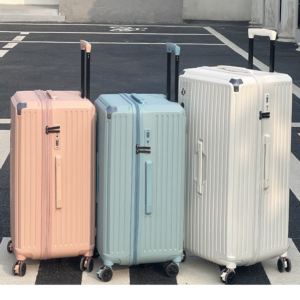

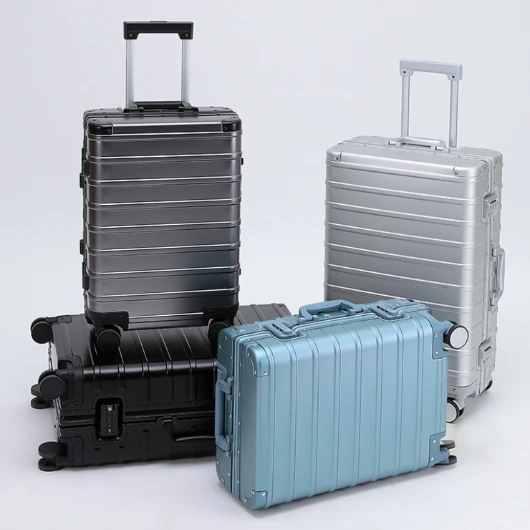
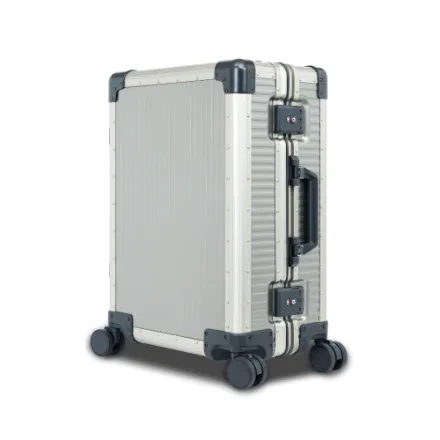
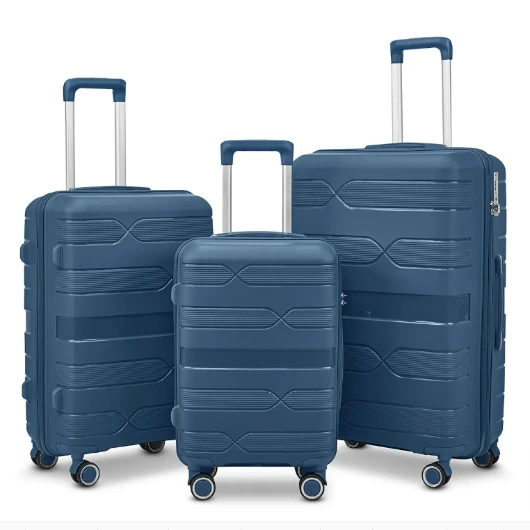
The question arrives as “how much is the mold,” which quietly assumes there is one. A luggage range is not one tool. It is a list of them, and the length of that list is decided by choices the buyer has usually already made without knowing it.
Ask for the list before you ask for the price. A number attached to an unnamed set of tools is not information, and it cannot be compared with the number a second factory sends you.
Two processes, two kinds of tool
Both get called a mold. They are not the same object, they do not cost the same, and they do not fail the same way.
A thermoformed shell starts as extruded sheet. The sheet is heated and formed over a tool, then trimmed. The tool is comparatively simple and comparatively cheap, and it makes one shape at a time.
An injection molded part starts as pellets. The tool is a steel die with cavities, cooling, and ejection built into it, and it is a different order of cost and lead time entirely. On a suitcase, the injected parts are the corners, the handle housings, the wheel brackets, the latch bodies, and the trim.
So a single suitcase can involve one forming tool for each shell half and a handful of injection tools for the hardware around it. Our note on which process your case actually needs goes through how the choice gets made.
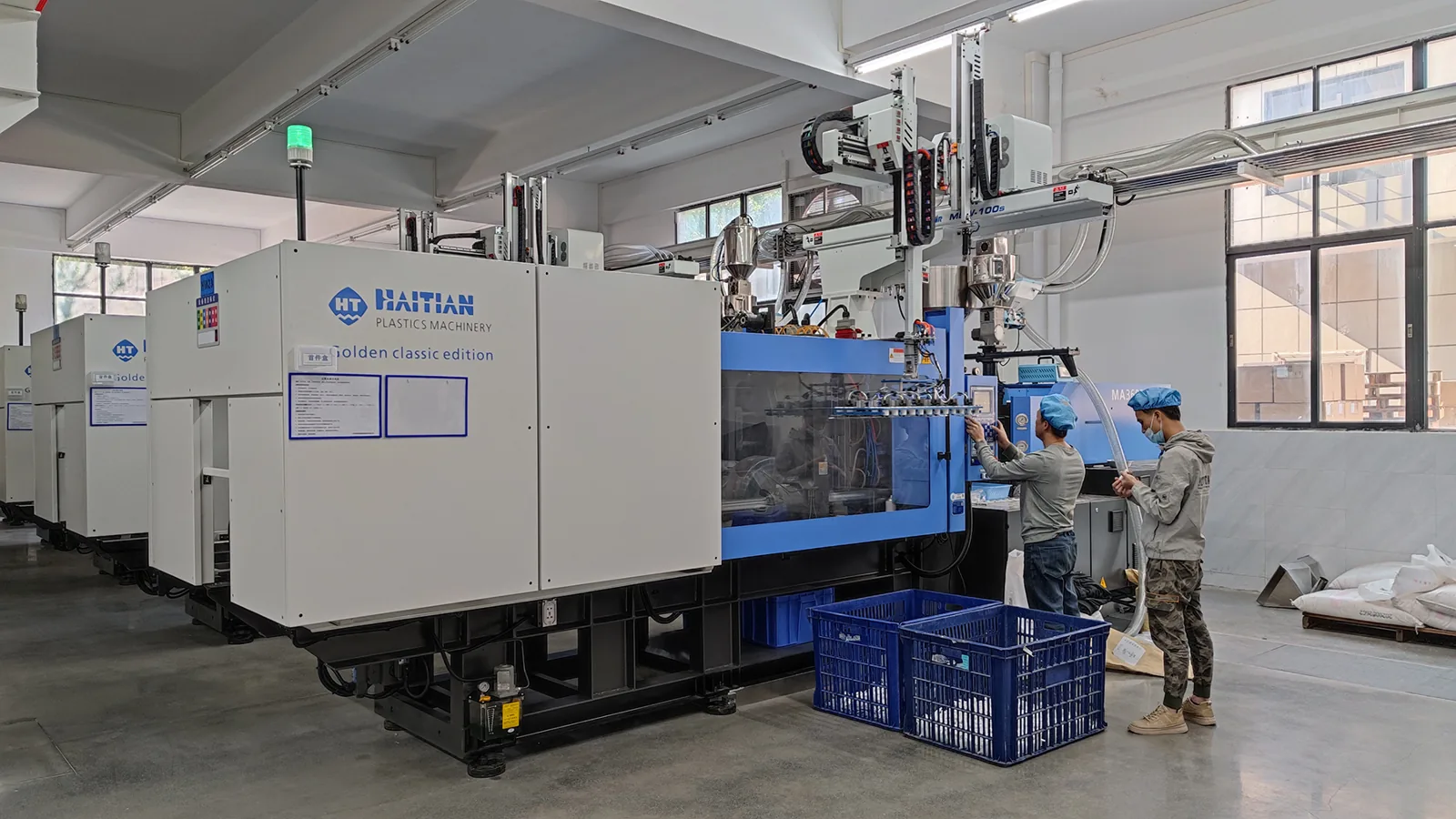
What you are buying when you buy an injection tool
Injection tools are graded. The grade is a life expectancy, not a quality adjective, and it is the single most useful thing on a tooling quotation.
The SPI classification runs from 101 to 105. Class 101 covers extremely high volume production injection tools built for lifetime cycles exceeding one million. Class 102 is medium to high volume, not to exceed one million. Class 103 is medium volume, not to exceed 500,000. Class 104 is low volume, not to exceed 100,000. Class 105 is prototype only, not to exceed 500 cycles. Source: SPI mold classifications, checked as of August 2026.
Read those numbers against your forecast. Not your ambition. A brand ordering 300 units a design per season does not need a class 101 tool, and paying for one is buying nine hundred thousand cycles nobody will run. A quotation that does not name the class is quoting an unknown object.
The class also tells you what a tool is worth if a program moves, which is a different question from who owns it. That one is covered in our note on paying for tooling against owning it.
Why a size range multiplies the list
Here is where the number grows. Faster than buyers expect, and in a way that is obvious only in hindsight.
A 20 in, 24 in, and 28 in case are three different shells. Each needs its own forming tool for each half. Scaling a drawing does not scale a tool, because the tool is a physical object cut to one set of dimensions.
Some hardware carries across the range and some does not. The lock, the wheels, and the handle grip usually carry. The handle housing and the corner geometry often do not, because they sit on panels that changed size.
Which is why the useful first question is not what the range should be. It is which sizes actually sell. A three size range with a full tooling set behind it costs more than twice a two size range, and the third size frequently earns the least. Cut a size. It is the cheapest decision available at this stage, and it stops being available the moment steel is cut.
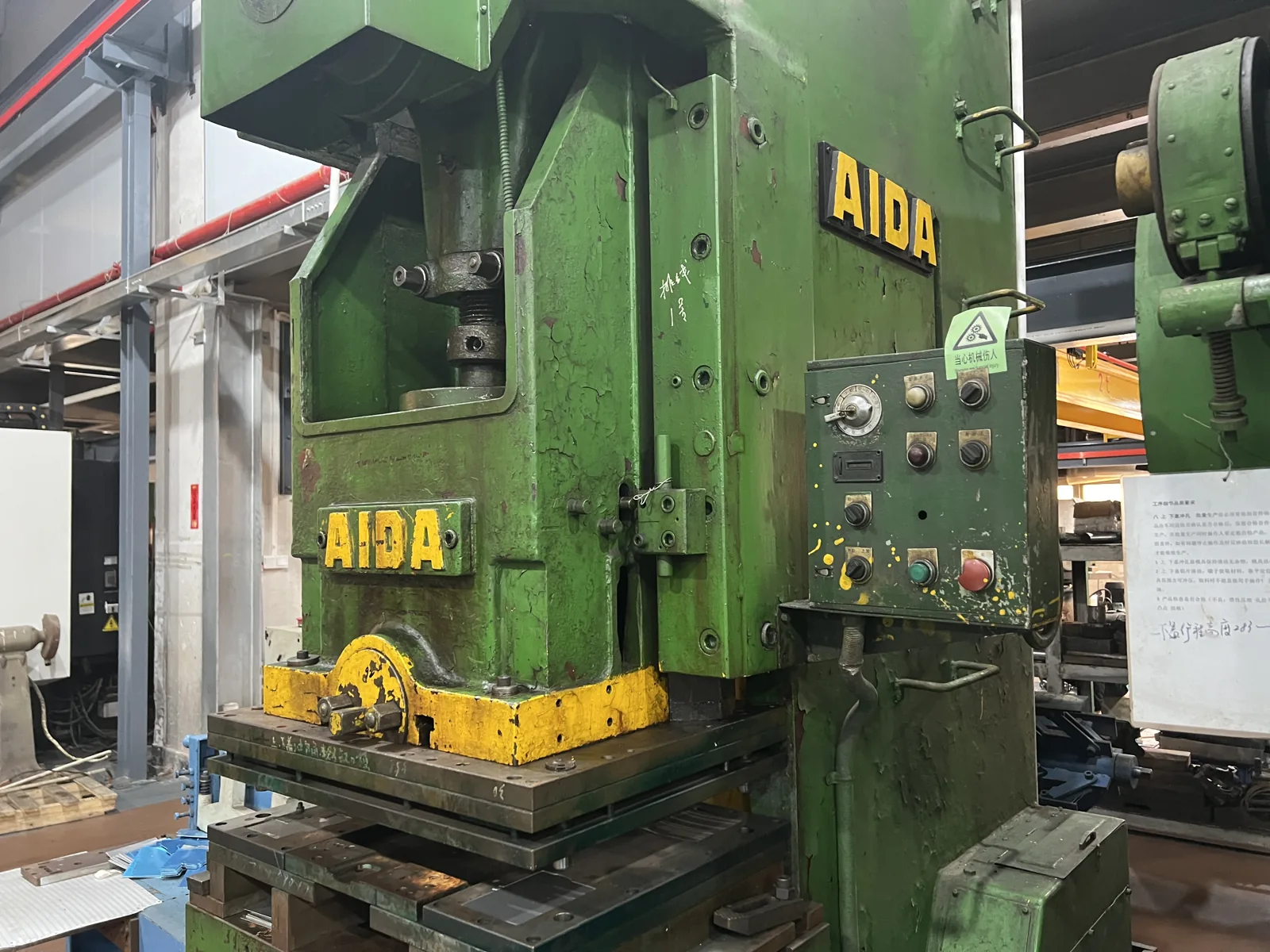
The press decides what tool can exist
A constraint nobody mentions in a quotation, and it is stamped on the side of the machine.
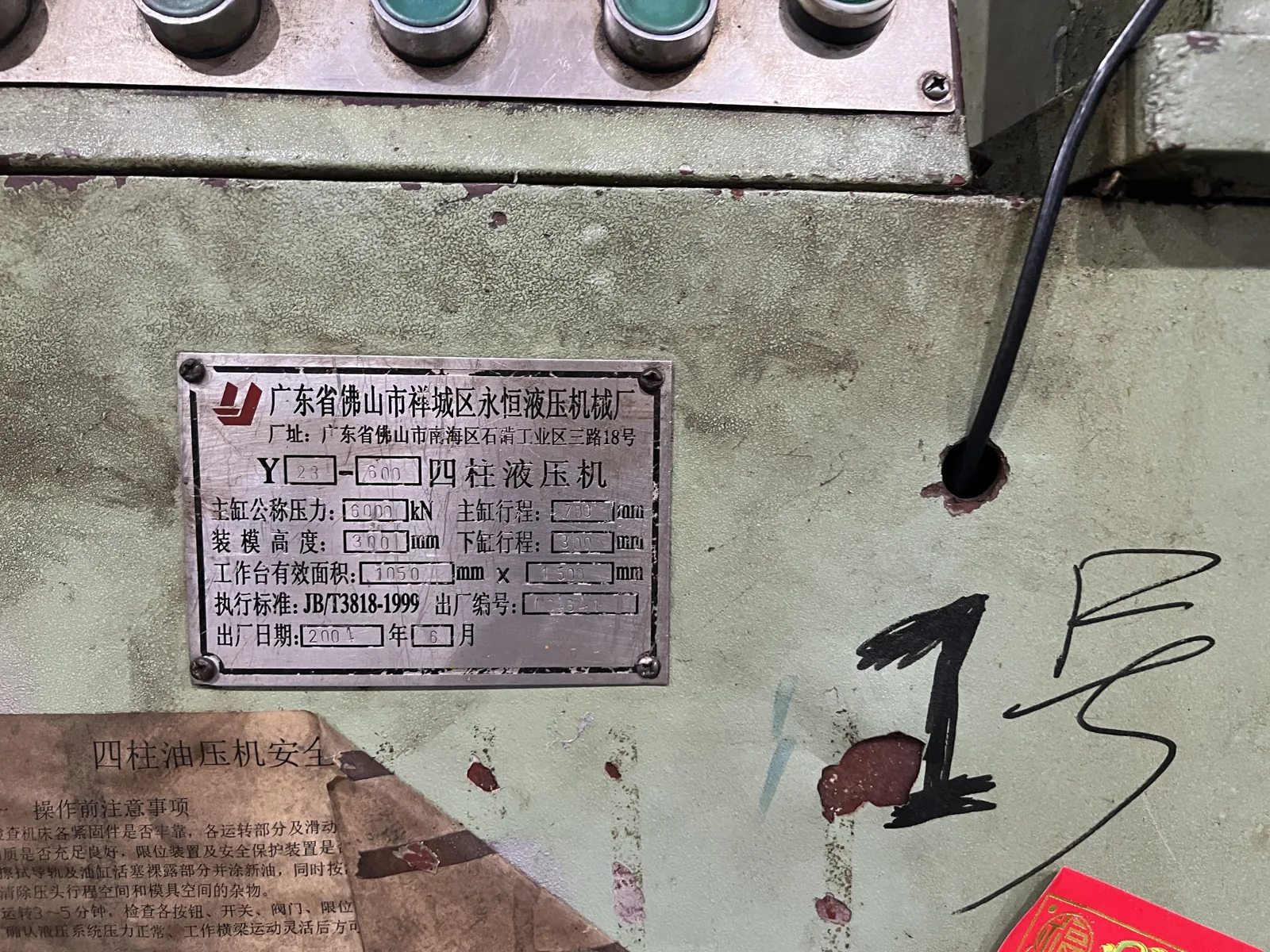
One of our four column hydraulic presses carries a nameplate reading Y23-600, 6000 kN on the main cylinder, a die mounting height of 300 mm, and an effective table area of 1050 mm by 1500 mm, built to JB/T3818-1999 in June 2001.
Those last two numbers are hard limits. A tool taller than the die height does not fit. A tool wider than the table does not sit. So the largest shell a given factory can form is set by the machines on its floor, not by what a drawing asks for. The same machines also decide which shapes a sheet aluminum panel can take. On a frame case the same logic applies to the hardware holes, which are set by die blocks in the frame punch rather than by an adjustable machine setting.
Which is why asking to see the equipment nameplates is a reasonable request rather than an intrusive one. Our note on what to look at on a factory visit covers which plates are worth photographing.
What a tooling list should look like
Five columns. It fits on one page.
Part name. Process, meaning formed or injected. Which sizes and colors the tool serves. For injected tools, the class and the expected life. Cost, and whether it is charged outright, amortized into the unit price, or rebated against volume.
That last column is the one that decides where the money and the risk sit, and the three mechanisms are not interchangeable. Our note on the three ways tooling gets charged goes through each.
Ask for the list to name the tools that already exist. A factory with a running program often has forming tools that fit your size within a tolerance you would accept, and using one turns a tooling line into a modification line. That is worth asking about before you approve a drawing rather than after.
How rarely this gets asked
We cleaned 2,424 substantive inquiries from our own forms and counted the subjects. Tooling and molds appear in 23 of them, under one percent.
Compare that with materials at 165 and minimum order quantity at 85. Tooling is usually the single largest line in a first order, and it is close to the least asked about at the point where asking would still change something.
The pattern is consistent. Buyers ask early about the things they can picture and late about the things that are expensive, which is the same effect we described in our note on why delivery comes up last. It also tracks the route a program takes. A buyer working from our catalog inherits existing tools, while a buyer arriving with a drawing is commissioning them, and that fork is the subject of our note on OEM against ODM. Same factory. Different tooling bill.
What we do and what we do not
We quote tooling as an itemized list rather than a single figure. If you receive one number from anybody for a multi size range, ask what is inside it.
We will tell you when an existing tool can serve a design with a modification, and what the modification costs against a new tool. Terms are set per program and written on the proforma invoice before anything is committed.
Our minimum is 300 units per design, and smaller test batches are negotiable rather than refused. Sampling runs 7 to 15 days per round and bulk is 45 days from a confirmed sample.
We do not quote a tool without naming it. A tooling figure with no part list attached is a number you cannot check, cannot compare against another factory, and cannot audit later.
Frequently asked questions
How many molds does a luggage collection need?
It depends on how many sizes and how much hardware is shared. Each size needs its own forming tool for each shell half, because a tool is cut to one set of dimensions and cannot be scaled. Injected parts such as corners, handle housings, wheel brackets, and latch bodies may carry across sizes or may not, depending on whether the panel they sit on changed. The way to find out is to ask for an itemized tooling list rather than a single figure.
What do the SPI mold classes mean for a small brand?
They set expected tool life. Class 101 is built for over a million cycles, 102 up to a million, 103 up to 500,000, 104 up to 100,000, and 105 is prototype only at up to 500 cycles. A brand running a few hundred units a design does not need the top classes, so a quotation that names no class is describing an object of unknown life.
Can an existing tool be used instead of cutting a new one?
Sometimes, and it is worth asking before the drawing is approved rather than after. A factory with running programs may hold forming tools close enough to your intended dimensions that a modification serves, which changes both the cost and the lead time. Once a drawing is signed off to dimensions no existing tool matches, that option has closed.
Written by James
James works at aluvox.com in Houjie, Dongguan. Equipment details in this article were read from the nameplates on the machines described.